The 5 Best CRM Software for Interior Designers in 2026
Published On: 25 April 2026
In 2026, finding the right CRM software is the difference between a scaling studio and a struggling one. As client expectations for transparency and speed reach an all-time high, interior design firms are moving away from generic tools and adopting specialized CRM software that handles everything from the first Instagram lead to the final site handover.
Managing the chaos of multiple projects requires an operating system that bridges the gap between creative design and physical execution. Here is our expert breakdown of the top 5 options available today.
Understanding CRM for the Modern Designer
In 2026, a CRM for designers isn’t just about contacts. It serves five critical functions:
- Lead Management: Tracking potential clients from Instagram, Pinterest, or referrals.
- Project Execution: Bridging the gap between the mood board and the construction site.
- Financial Clarity: Generating automated BOQs and tracking vendor payments.
- Client Experience: Providing a professional portal or app where clients can see live progress.
- Vendor & Procurement Management: Centralized coordination with vendors, material sourcing, and order tracking ensuring quality, cost efficiency, and timely availability.
1. Dzylo: The All-in-One Execution Engine
Dzylo has established itself as the industry standard for turnkey firms that need more than just a contact list. In 2026, it functions as a full-scale business intelligence platform.
Key 2026 Features:
- AI-Powered Smart Quotations: Use natural language prompts to generate complex, room-wise BOQs. Dzylo automatically factors in the latest market rates for materials and labor, saving hours of manual entry.
- Meta-Verified WhatsApp Ecosystem: Forget emails that go to spam. Dzylo integrates directly with the WhatsApp Business API to send automated project milestones, 360° virtual tour links, and payment reminders where clients actually see them.
- Real-Time Site Transparency: With the Site Activity Tracker, supervisors upload geo-tagged photos directly from the field. These sync instantly to your Branded Client App, giving your clients a live feed of their home transformation.
- End-to-End Procurement: Dzylo doesn’t just track leads; it tracks the wood, the tile, and the labor. Compare vendor quotes side-by-side and manage your inventory across multiple project sites from one screen.
Best For: Firms that handle both design and execution and want to automate the physical reality of the site.
Unlike generic CRMs (like Zoho or HubSpot), Dzylo is built for the messy reality of interior design, including material consumption, room-wise breakdowns, and labor management.
Features like Imagino can read 2D floor plans to auto-calculate dimensions, reducing the time spent on manual estimations by up to 80%.
2. Zoho CRM
A comprehensive CRM offering a wide range of features, Zoho caters to businesses of all sizes.
Key 2026 Features:
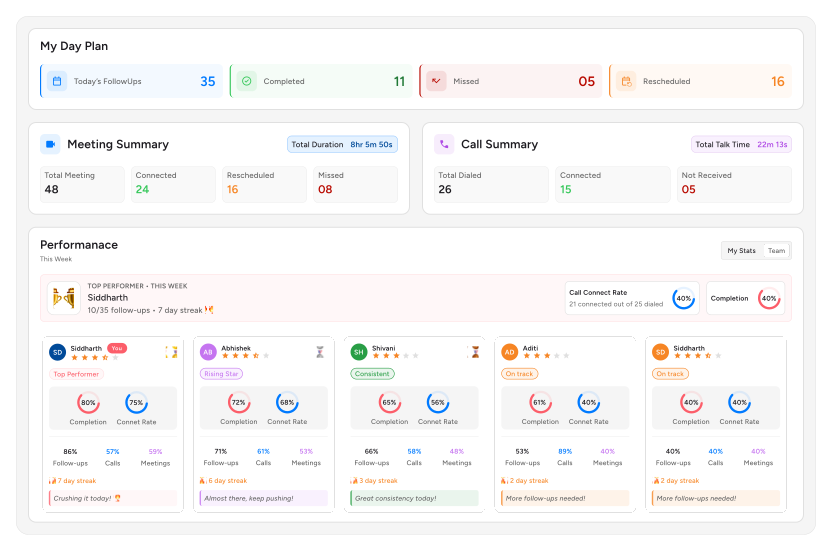
- Zia AI Analytics: Zoho’s AI assistant, Zia, focuses on sales forecasting. It can analyze your past lead data to predict which potential clients are most likely to close, helping your sales team prioritize their phone calls.
- Multichannel Communication: Zoho centralizes interactions from email, social media, and live chat. This ensures that every time a client reaches out, the history is logged in their contact card for your office team to see.
- Extensive Integration Marketplace: Through Zoho Marketplace, you can connect the CRM to hundreds of third-party apps like Google Workspace, Microsoft 365, or accounting software like QuickBooks to sync your financial data.
- Blueprints for Process Mapping: You can create Blueprints that force your employees to follow specific steps in a sales process such as requiring a site visit before a proposal can be sent ensuring a standardized corporate workflow.
Best For: Large interior design corporations or multi-city firms that have a dedicated IT or Operations team to manage and customize the software.
3. HubSpot CRM: The Marketing & Growth Specialist
HubSpot is widely recognized as one of the most user-friendly CRM platforms in the world, built primarily to help businesses attract and engage customers through content marketing. In 2026, it remains a top choice for firms that focus heavily on their digital presence, though it functions more as a marketing and sales hub than a technical construction tool.
Key 2026 Features:
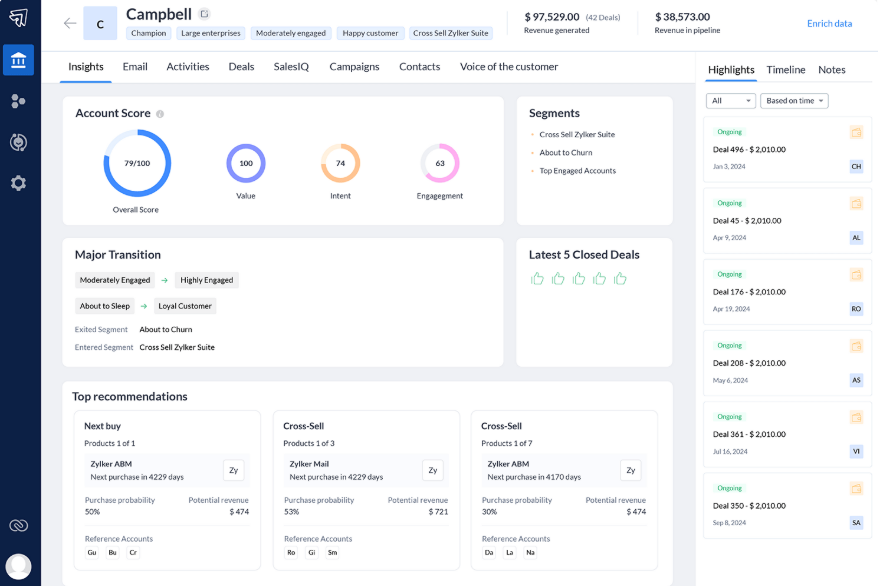
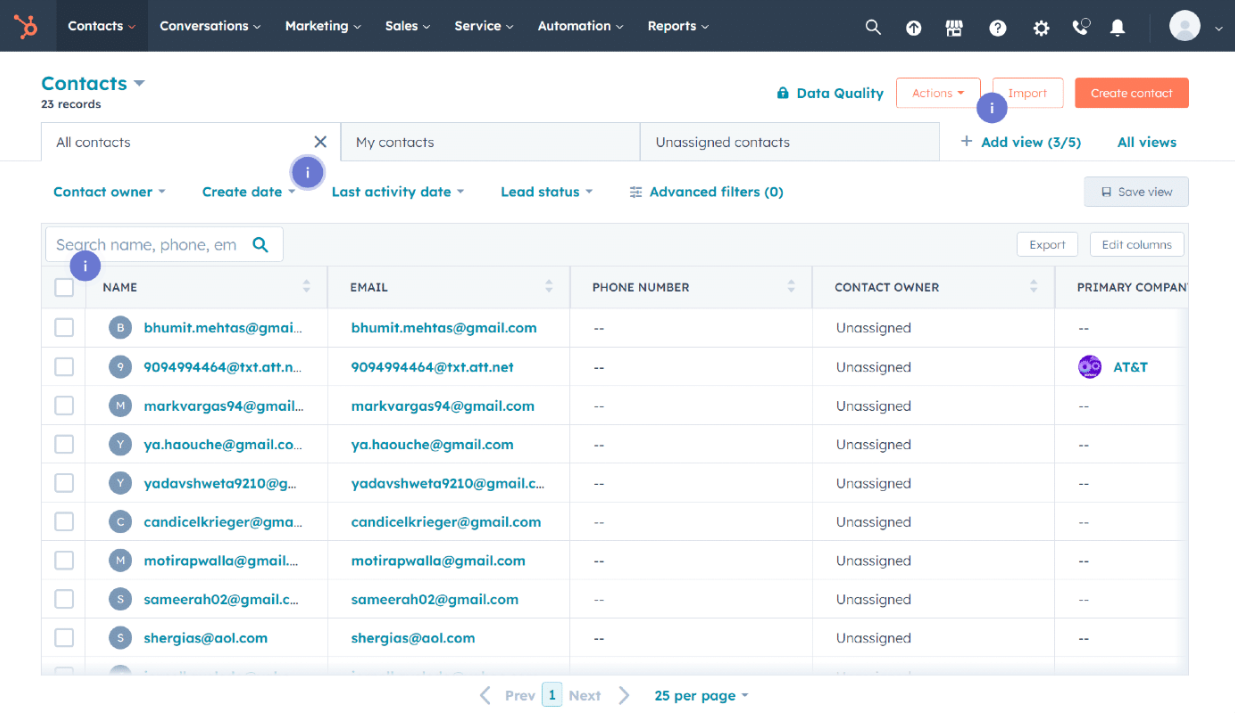
- Unified Marketing Hub: HubSpot excels at tracking the Client Journey. It can tell you exactly which Instagram ad or blog post a lead clicked on before they filled out your inquiry form, allowing you to see which marketing efforts are actually working.
- Automated Email Sequences: You can set up Workflows that automatically send a series of beautifully designed emails to a lead once they inquire. This keeps your brand at the top of their mind without you having to manually follow up every day.
- Meeting Scheduler Integration: Instead of back-and-forth messaging, HubSpot provides a custom link where clients can see your calendar and book their own design consultations, which then syncs automatically to your Google or Outlook calendar.
- Document Tracking: When you send a PDF proposal or a mood board link through HubSpot, the system notifies you the exact moment the client opens the file and which pages they spent the most time looking at.
Best For: Design firms that prioritize high-end marketing, lead generation and professional brand presentation during the initial sales phase.
4. Zendesk: The Customer Service & Ticketing Expert
Zendesk is a global leader in customer service software, designed primarily for companies that handle a high volume of client inquiries and support requests. In 2026, it has expanded its Zendesk Sell CRM features to better align sales and service. For an interior design firm, it acts as a professional communication hub, though it remains focused on “tickets” rather than timber and tiles.
Key 2026 Features:
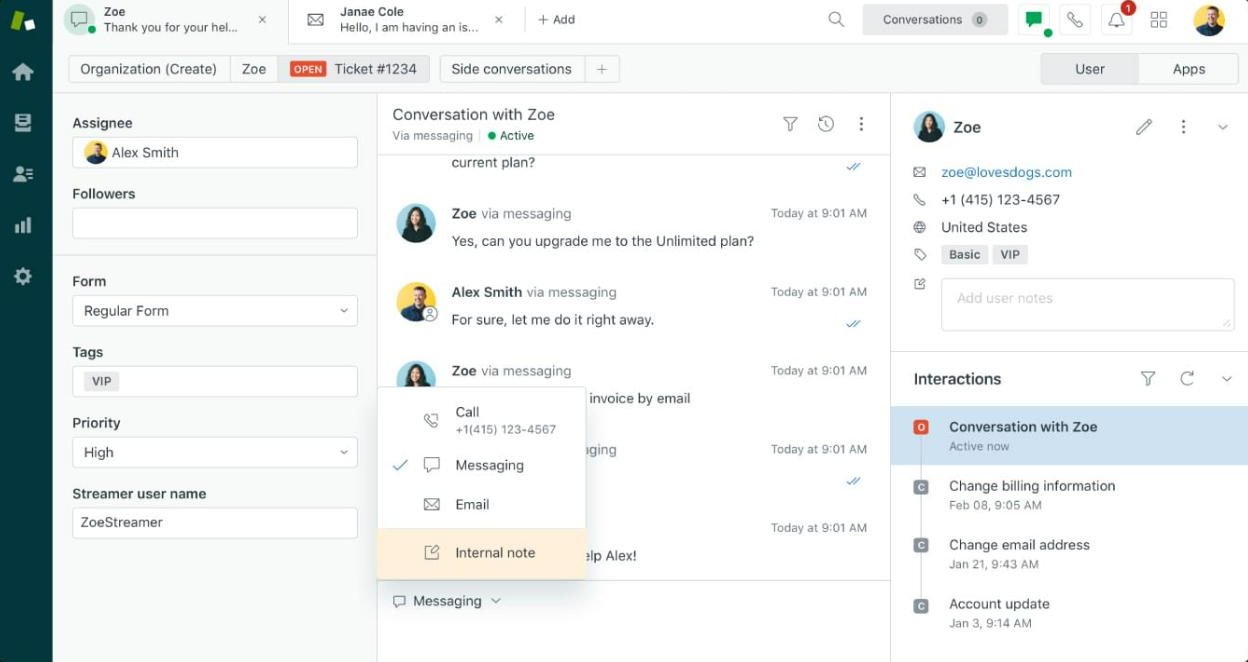
- Omnichannel Ticketing System: Zendesk converts every client interaction whether it’s an email about a leaky tap or a WhatsApp message about a furniture delivery into a Ticket. This ensures that no client request is ever lost and allows your team to assign tasks to specific departments (like Design vs. Projects).
- AI-First Service Platform: In 2026, Zendesk uses Agentic AI to handle basic client questions. If a client asks, What is the status of my modular kitchen? the AI can check your integrated database and provide an instant update, freeing up your time for creative work.
- Knowledge Base (Help Center): You can build a Self-Service portal for your clients. This can host FAQs, material care guides (e.g., How to maintain your Italian marble), and project timeline explainers reducing the number of repetitive calls your team receives.
Best For: Large-scale interior firms or developers who manage hundreds of units and prioritize high-quality post-handover support and maintenance.
5. Bonsai: The Creative Solopreneur’s Toolkit
Bonsai is a highly specialized platform designed for freelancers and small creative agencies who want to look professional with minimal administrative effort. In 2026, it remains the go-to minimalist CRM for designers who prioritize beautiful documentation and smooth client onboarding over heavy site management.
Key 2026 Features:
- Automated Contract & Proposal Templates: Bonsai provides legally-vetted templates specifically for interior designers. Once a client signs a proposal, the system can automatically generate the contract and the initial deposit invoice in one seamless flow.
- Integrated Client Portal: You can give your clients a White-Labeled portal (under your own branding) where they can view their mood boards, sign documents, and pay invoices. This makes a small solo practice feel like a much larger, established firm.
Best For: Independent interior designers, consultants, and micro-studios who focus on the creative studio phase of a project and need a simple, elegant way to handle paperwork.
How To Choose CRM For Interior Design Business
Selecting the perfect CRM for interior designers depends on your business size, budget, specific needs, and preferences.
Consider the following factors:
- Business Size: Small firms might prefer user-friendly and affordable options like Bonsai, while larger firms might benefit from the comprehensive features of Zoho or HubSpot if you are a small to mid size firm Dzylo is here to help.
- Budget: Determine your budget for the CRM software and any additional features or integrations you need.
- Features: Identify the essential features of your business, such as lead management, project management, invoicing, and customer support.
- Ease of Use: Choose a CRM with an intuitive interface that your team can easily adopt.
- Scalability: Consider your business growth plans and select a CRM that can accommodate future expansion.
Take advantage of free trials or demos to test different CRM options and see which one aligns best with your workflow and preferences.
Frequently Asked Questions (FAQs)
1. Is Dzylo suitable for small design firms as well as large construction companies?
Yes, Dzylo is built to be scalable and fulfills the needs of both small and large firms. Its core function is to streamline project management, client communication, and procurement, making it efficient for any size of interior design or construction business.
2. How does Dzylo help with procurement and inventory management?
Dzylo offers smart procurement and inventory tools that allow you to manage material requests, generate purchase orders (POs), compare supplier quotes, and track inventory in real-time. This includes comprehensive material tracking across multiple projects, helping you avoid stockouts and over-ordering.
3. What is a Quotation Generator for interior designers?
Dzylo’s Quotation Generator is a perfect tool for interior designers to quickly generate quotations that are professional and accurate. It enhances the process by ensuring no detail goes unmentioned about the project. With its automated calculations, it reduces the risk of any human error.
4. Why do you need a Quotation Generator for interior designers?
A Quotation Generator saves time, ensures consistency, and reduces errors in pricing. It helps interior designers create professional quotes quickly, maintain pricing accuracy across projects, and present detailed breakdowns to clients, ultimately improving client trust and closing rates.